

Liquidity Sweep Explained: What It Is and How to Trade It
A liquidity sweep is a move through a level where stop orders rest, followed by a reversal. Learn to spot bullish and bearish sweeps, and how to trade the reclaim.

A liquidity sweep occurs when price moves through a key liquidity level, triggering the clusters of pending orders resting there, before reversing direction. Large market participants drive price into these zones deliberately to fill their own positions with minimal slippage. Understanding where sweeps happen and how to read them gives you a cleaner read on market direction.
What Is Liquidity in Trading?
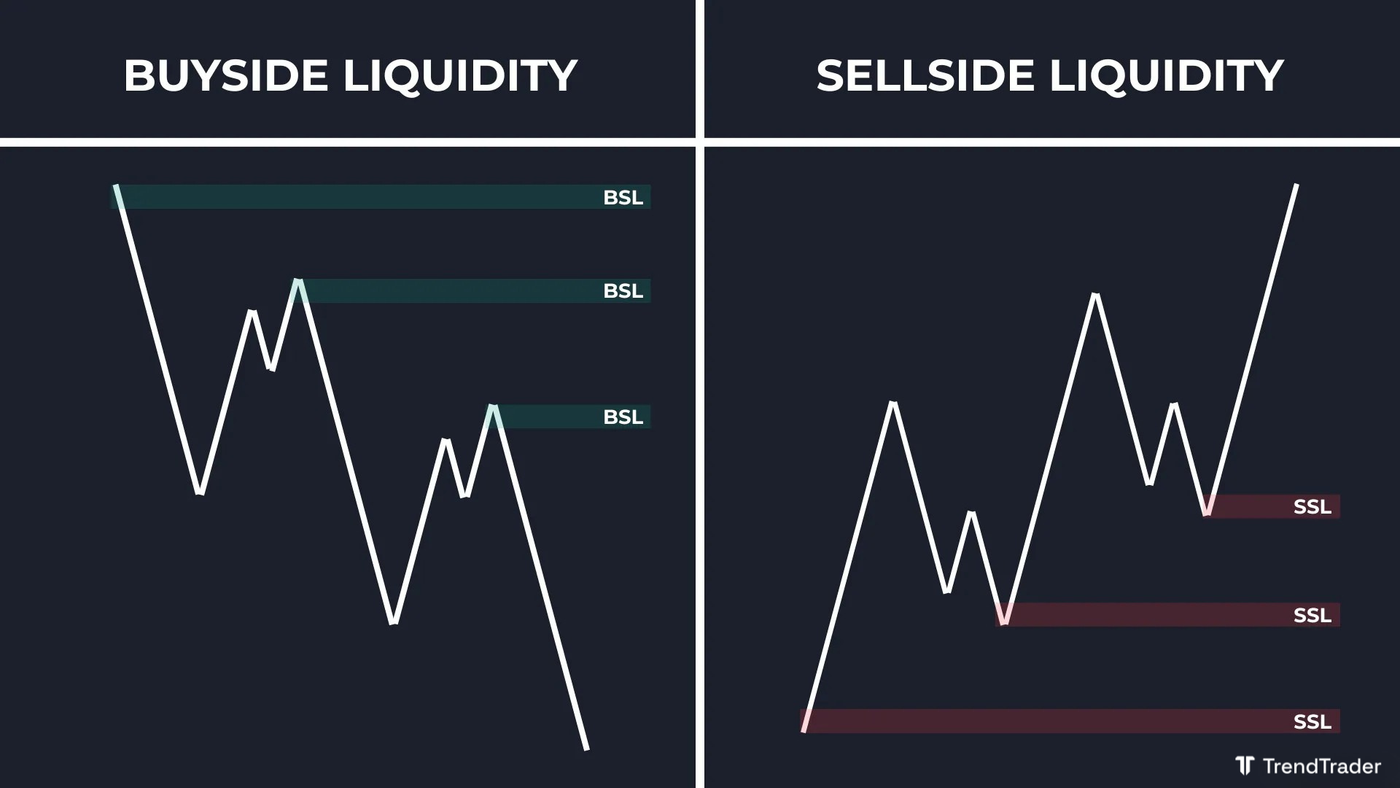
There are two types of liquidity on a price chart: buyside liquidity (BSL) and sellside liquidity (SSL). BSL refers to the price levels above key highs where short sellers have placed their stop losses. SSL refers to the price levels below key lows where long traders have placed theirs. Both represent clusters of pending orders that the market tends to target before making significant moves.
What Is a Liquidity Sweep?
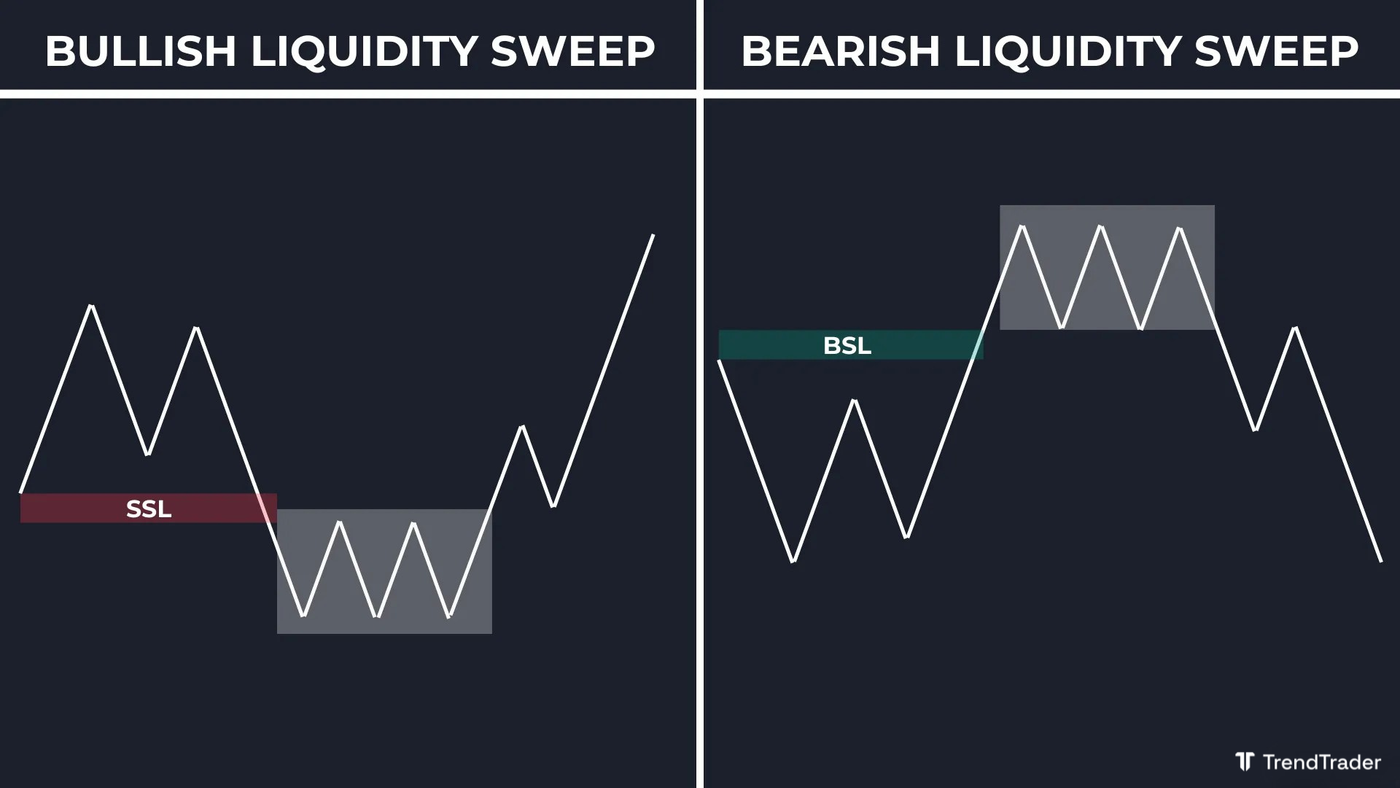
A liquidity sweep is a deliberate move by large institutional participants through a key BSL or SSL level to trigger the pending orders sitting there. Those triggered orders provide the liquidity needed to fill large positions without significant slippage. Once the orders are absorbed, the market reverses, often sharply, in the opposite direction.
The key characteristic: price does not just touch the level, it goes through it. It may consolidate briefly on the other side before reversing back. That consolidation period is what distinguishes a sweep from a liquidity grab, where the reversal happens within a single candle.
How to Identify a Liquidity Sweep
Mark your BSL and SSL levels on the chart: swing highs, swing lows, prior session highs and lows, and equal high or equal low formations. Then watch how price behaves when it reaches those levels. If price moves through a level, holds briefly, and then reverses back through it, that is a liquidity sweep.
A sweep at sellside liquidity (below a key low) gives you a bullish bias. A sweep at buyside liquidity (above a key high) gives you a bearish bias. The sweep tells you which side of the market absorbed the stop orders and is now positioned to push price in the opposite direction.
Buyside Liquidity Sweep
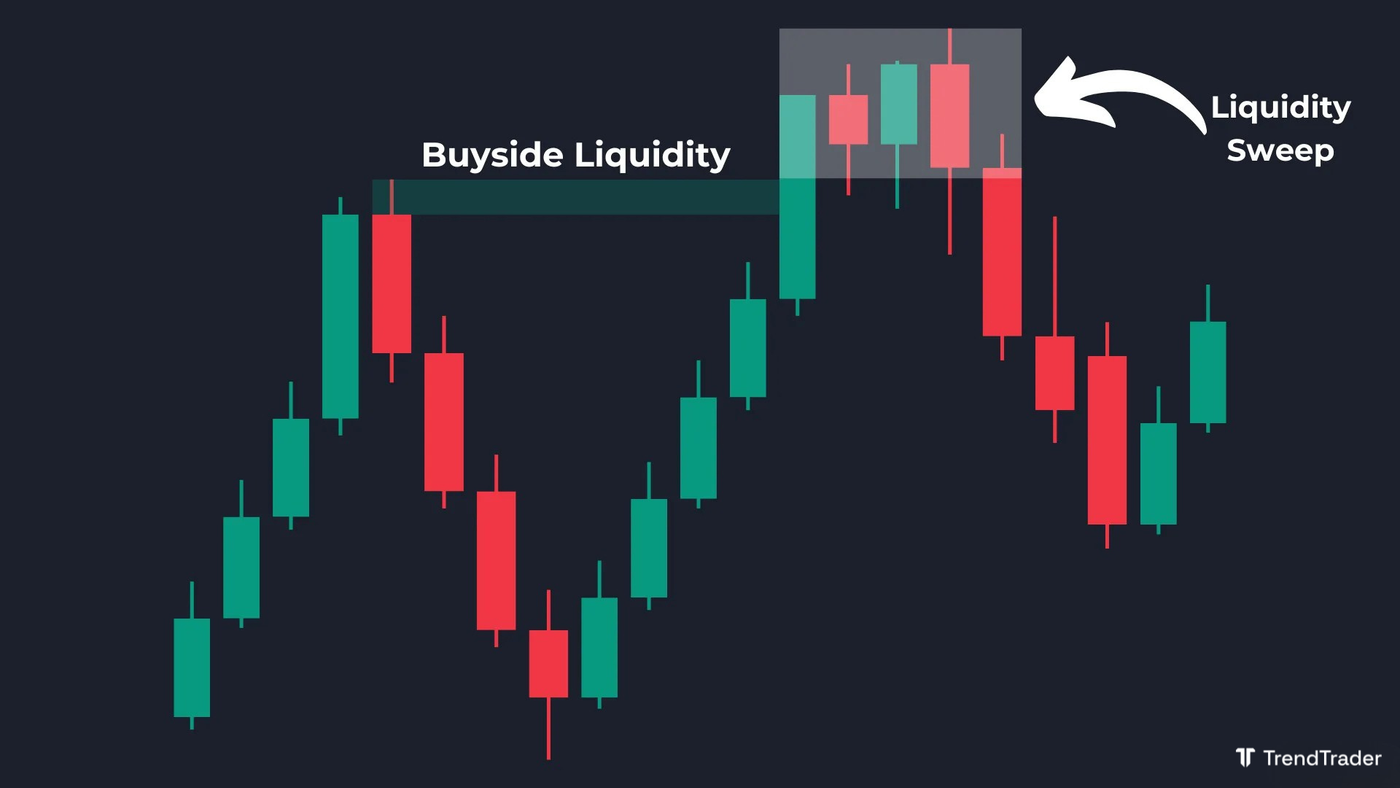
In a buyside liquidity sweep, price pushes above a key high, triggering the stop losses of traders who are short. Price may consolidate briefly above the level before reversing back below it. Once price closes back below the level, the sweep is confirmed and you should adopt a bearish bias: the buyers who caused the breakout have been absorbed, and sellers now control the order flow.
Sellside Liquidity Sweep
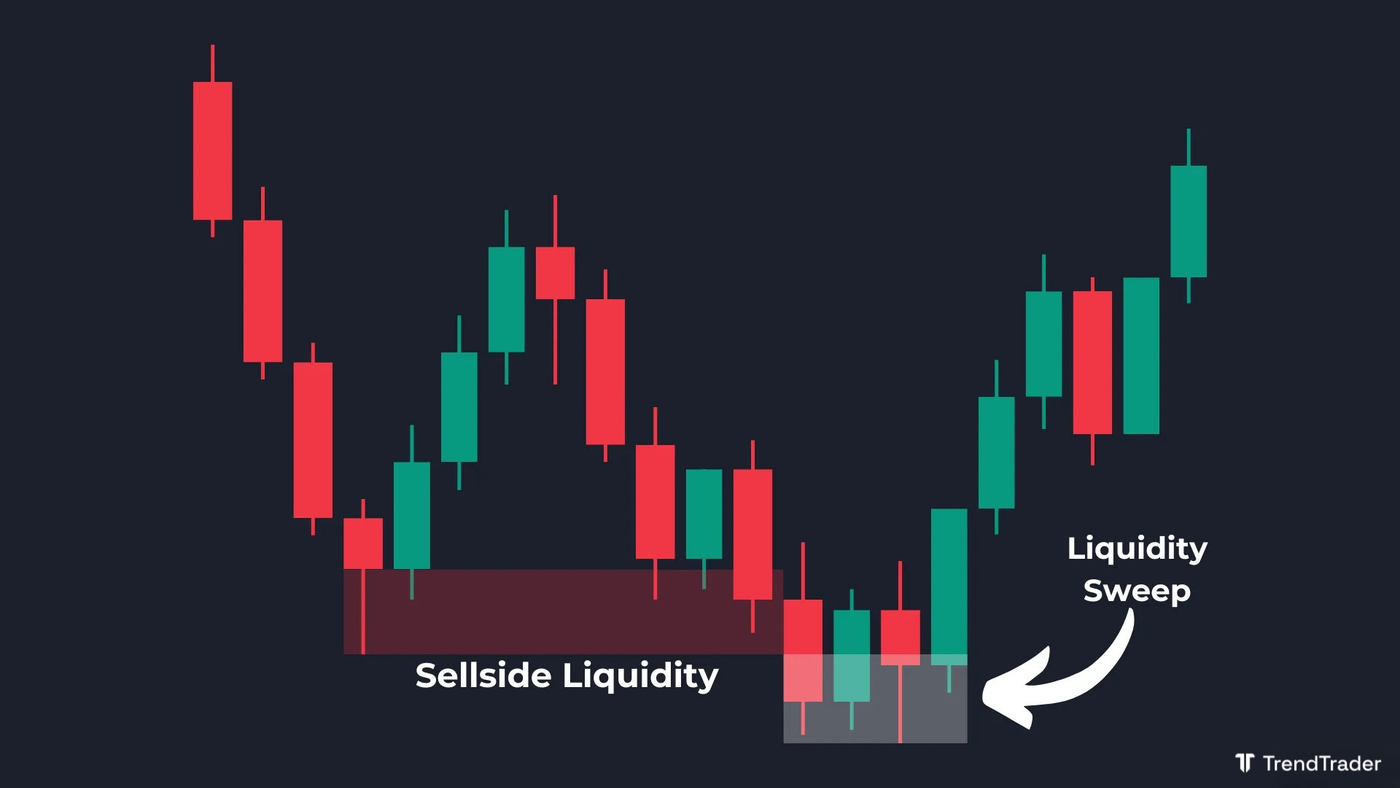
In a sellside liquidity sweep, price pushes below a key low, triggering the stop losses of traders who are long. Price may consolidate briefly below the level before reversing back above it. Once price closes back above the level, the sweep is confirmed and you should adopt a bullish bias: the sellers who caused the breakdown have been absorbed, and buyers now control the order flow.
How to Trade Liquidity Sweeps
Liquidity sweeps establish your directional bias, but they are not standalone entry triggers. Once a sweep is confirmed, wait for price to reach a specific entry zone before executing a trade. The most reliable entries are at fair value gaps (FVGs) or order blocks that form after the sweep, in the direction of the reversal.
Long Trade Example
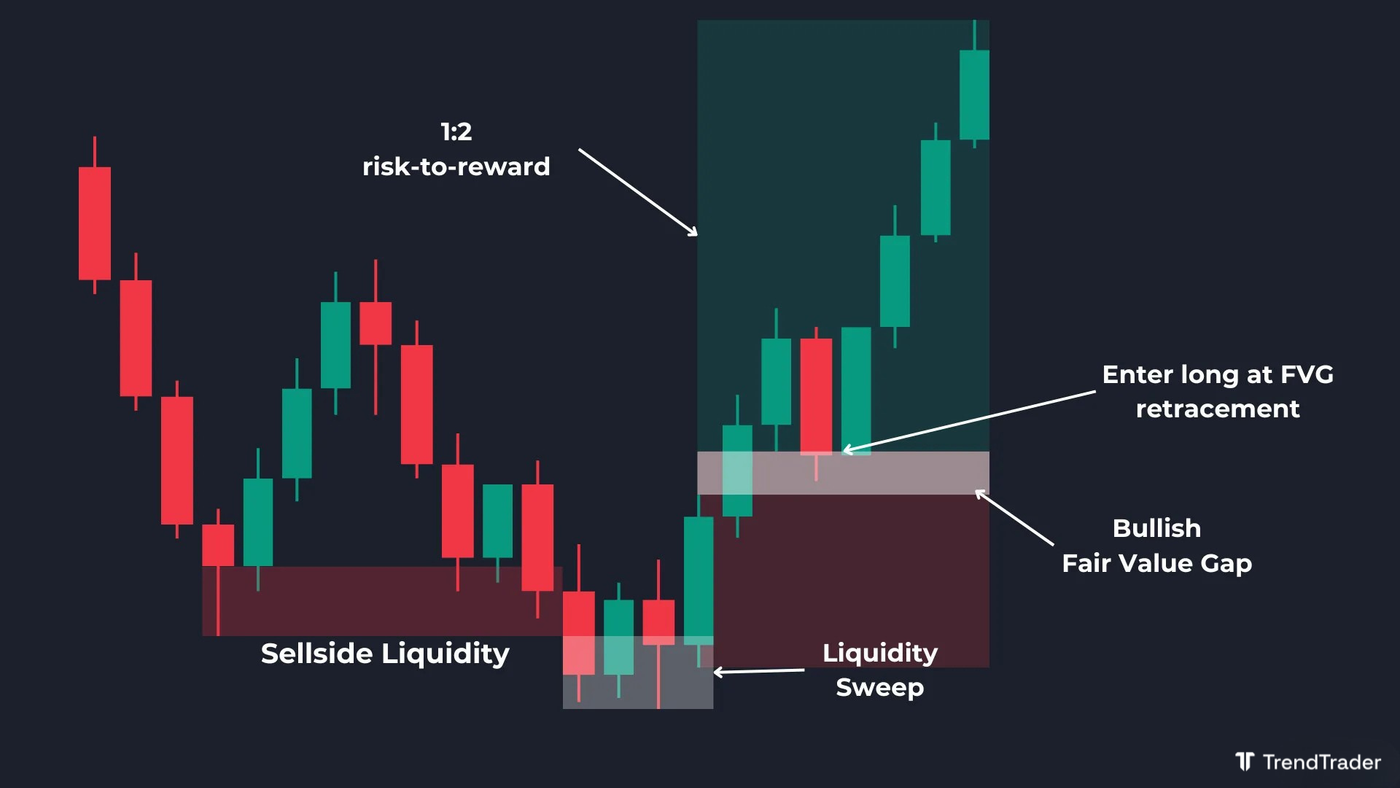
A sellside liquidity sweep forms below a key low. Price reverses back above the level, establishing a bullish bias. Shortly after, price accelerates upward and leaves a bullish fair value gap (FVG). When price retraces into the FVG, enter long with a stop loss below the liquidity level and target a 1:2 or greater risk-to-reward. The sweep gave you the bias. The FVG gave you the entry.
Short Trade Example
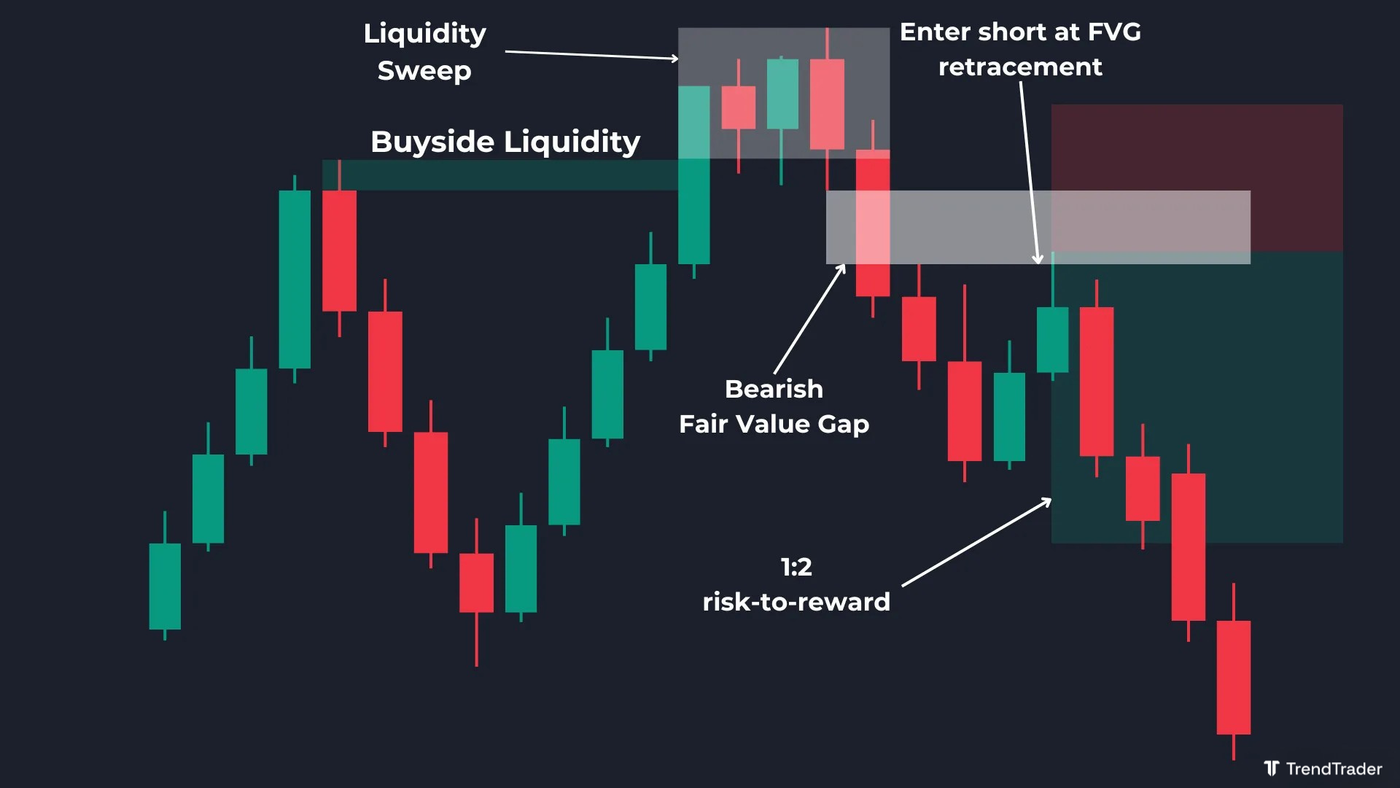
A buyside liquidity sweep forms above a key high. Price reverses back below the level, establishing a bearish bias. Shortly after, price drops sharply and leaves a bearish fair value gap (FVG) or a bearish order block. When price retraces up into that zone, enter short with a stop loss above the liquidity level and target a 1:2 or greater risk-to-reward. The sweep gave you the bias. The zone gave you the entry.
Liquidity Sweeps vs. Liquidity Grabs
Both concepts describe price clearing a liquidity level and reversing. The difference is timing and structure.
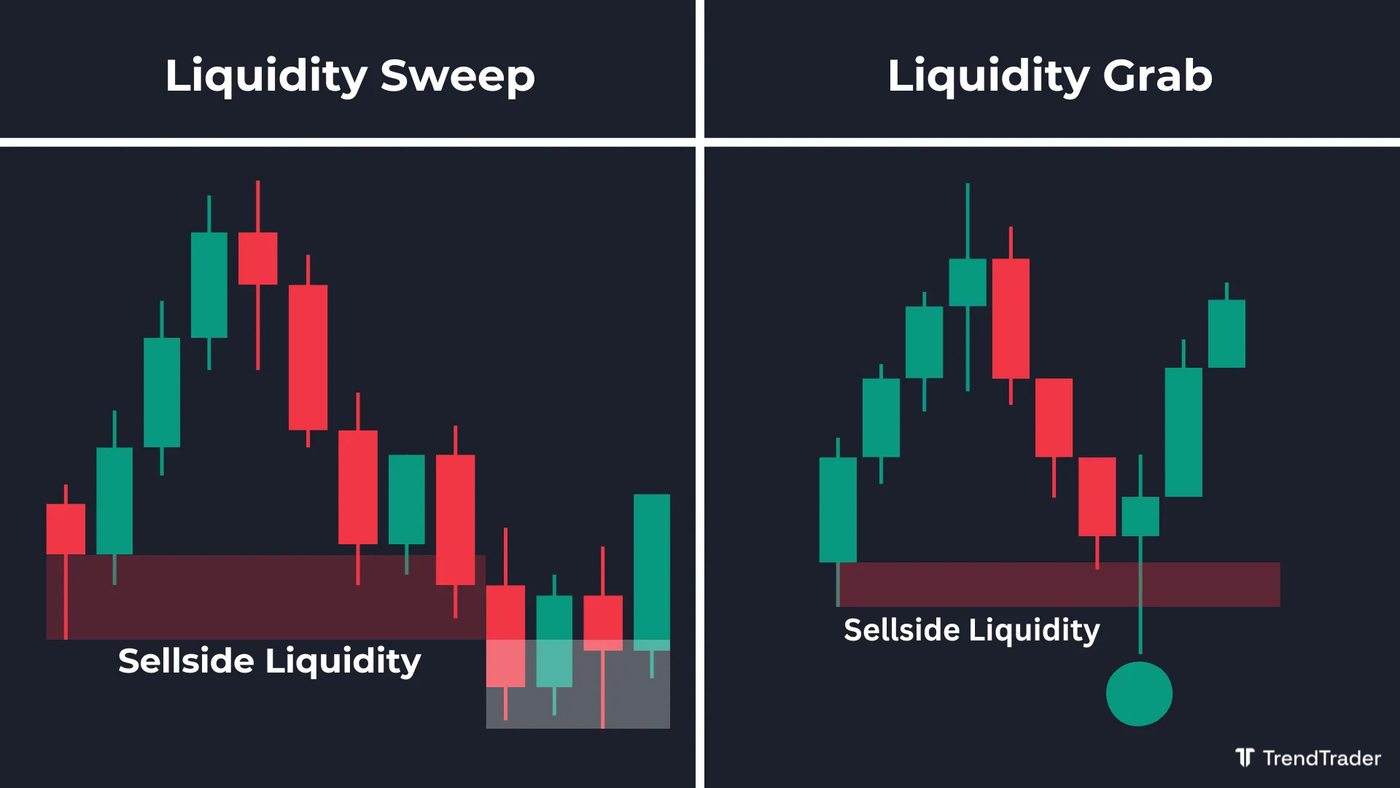
A liquidity sweep plays out over multiple candles. Price moves through the level, may consolidate on the other side for a period, and eventually reverses back. The sweep can develop slowly.
A liquidity grab happens within a single candle. Price spikes through a level and closes back on the other side within the same candle, leaving a long wick. The Dragonfly Doji (bullish grab at SSL) and Gravestone Doji (bearish grab at BSL) are the classic shapes.
In practice, both indicate the same underlying mechanism: a stop hunt followed by a reversal. Sweeps are easier to trade on higher timeframes where the consolidation above or below the level is clearly visible. Grabs are more common on lower timeframes and scalping setups.
Can You Trade Solely Using Liquidity Sweeps?
No. A sweep establishes your directional bias, but you still need a defined entry level, a stop loss placement, and a target to structure a trade. Without a specific entry zone such as an FVG or order block, you are entering on the sweep close alone, which carries more risk and less precision.
Pair sweeps with other SMC tools: a fair value gap or order block for the entry, premium and discount zones to filter which setups are at favorable locations, and a break of structure or change of character to confirm momentum has actually shifted.
What Is the Best Timeframe to Trade Liquidity Sweeps?
Liquidity sweeps are identifiable on every timeframe, from the one-minute to the monthly chart. Higher timeframe sweeps carry more weight: a sweep of the prior week's low on the daily chart is a more significant event than a sweep of a 15-minute swing low.
The practical approach is to identify sweeps on higher timeframes to establish your macro bias, then drop to a lower timeframe to find a precise entry. Aligning your trade direction with a higher timeframe sweep keeps you on the right side of the larger order flow.
What Does a Liquidity Sweep Look Like on a Chart?
A liquidity sweep looks like a failed breakout. Price pushes decisively through a swing high or swing low, often with one or two large candles, then stalls and closes back inside the prior range. It leaves either a long wick beyond the level or a short cluster of candles that could not hold the new ground.
The tell is the close, not the spike. A genuine breakout closes beyond the level and builds from there. A sweep closes back through it, usually within one to three candles, and the move that follows runs the other way.
Liquidity Sweep vs. Stop Hunt
There is no mechanical difference between the two. "Liquidity sweep" names the footprint on the chart. "Stop hunt" names the intent behind it: running the resting stop-loss orders that sit beyond an obvious level.
Smart Money Concepts traders tend to say sweep. Market maker method traders tend to say hunt. Floor traders called it running the stops. Same event, same trade, three vocabularies.
Where Liquidity Sweeps Fit in the Market Maker Cycle
A sweep is not a standalone event. It is phase two of the market maker cycle: a quiet accumulation range, then the sweep that fills orders at the extreme, then the directional move to the other side of the range.
That third leg is where the distance is. The sweep tells you a cycle is turning. The market maker trend that follows is the move worth holding. Traders who only trade sweeps collect the reversal and leave the trend behind.
This is the logic behind TrendTrader Pro. Its engine does not fire on the sweep itself. It marks the point where a new directional cycle has been established after the sweep, and flips when that cycle ends.
FAQ
What is the difference between a liquidity sweep and a liquidity grab?
A liquidity sweep unfolds over multiple candles: price moves through a level, potentially consolidates, and then reverses back. A liquidity grab completes within a single candle, leaving a long wick and a close back through the level. Both involve the same stop-hunt mechanics, but sweeps develop more slowly and grabs happen sharply.
How do you confirm a liquidity sweep?
Confirmation comes when price closes back through the swept level in the opposite direction. A sweep of a prior low is confirmed when price closes back above that low. A sweep of a prior high is confirmed when price closes back below that high. Until price closes back through, the move is still potentially a breakout rather than a sweep.
What should you do after a liquidity sweep?
Establish your directional bias from the sweep direction, then wait for a specific entry zone to form: a fair value gap, order block, or inversion fair value gap in the direction of the reversal. Execute at the zone with a defined stop and target. The sweep tells you where the market is going. The entry zone tells you when to get in.
This article is for educational purposes only and does not constitute financial advice. Trading involves significant risk of loss. Do your own research and consult a licensed financial advisor before making any trading decisions.
Browse more trading concept guides on the TrendTrader blog.
