
University
Video modules, guides, and frameworks — everything you need to master TrendTrader Pro. Free with every account, a new video every week.
Getting Started
Everything you need to get up and running with TrendTrader Pro. Learn the platform, understand the signal feed, and create your first watchlist.
▶ Start Chapter 1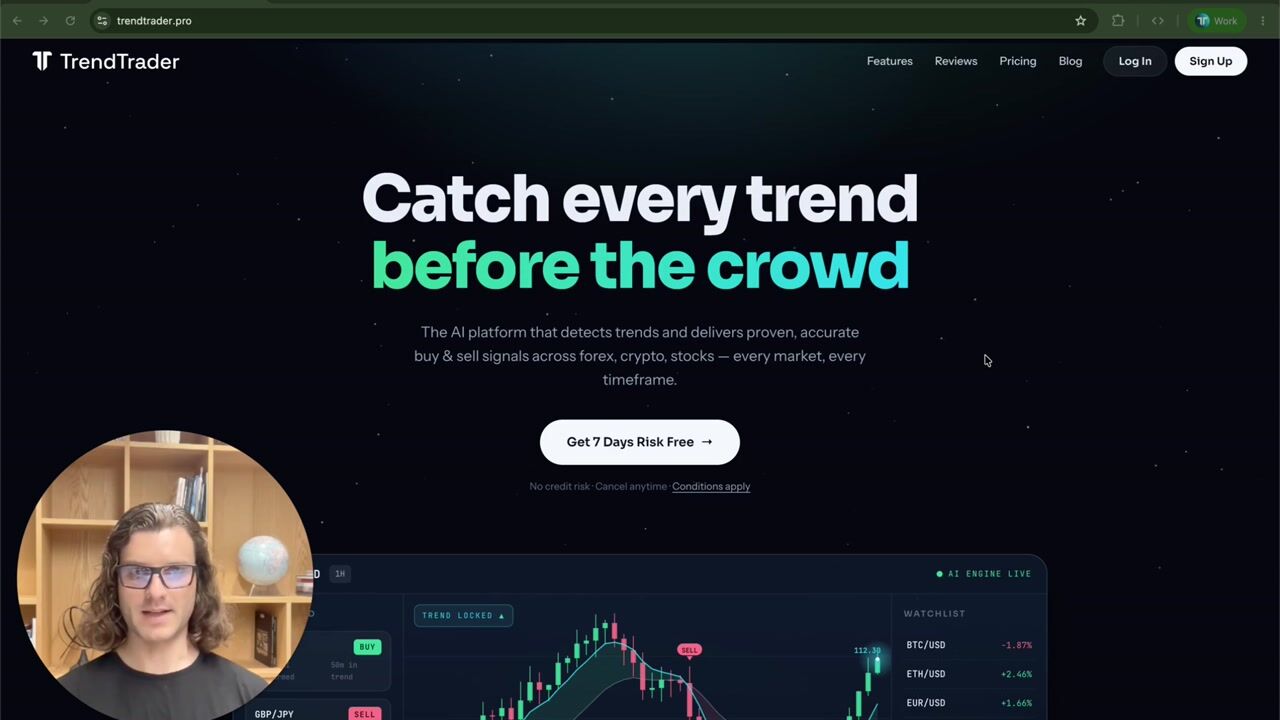 23:34
23:34
Getting Started
3 lessons · ~35 min
Everything you need to get up and running with TrendTrader Pro. Learn the platform, understand the signal feed, and create your first watchlist.
 23:34
23:34
Welcome to TrendTrader Pro
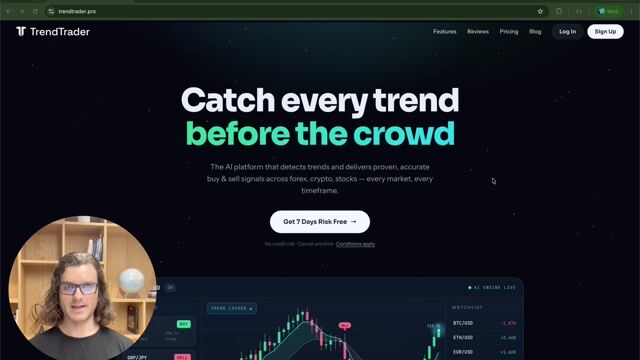
Meet Nick and the platform he built after a decade in the business. He covers where TrendTrader Pro came from, what it is (a trend-detection algorithm and an entry-confirmation system combined into one tool, not a broker), who the daily and intraday engines are for, and why the signals are selective rather than noisy. Then a full tour of the website, the plans, the affiliate program, support, and where the platform is heading next.
 7:33
7:33
Navigating the Dashboard
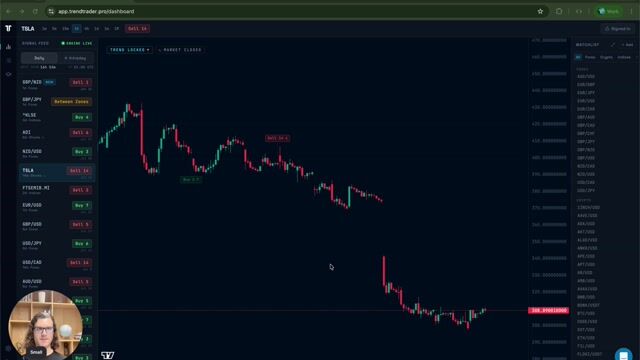
A guided tour of the three panels you will live in: the Signal Feed, the chart, and your Watchlist. Nick shows how the watchlist controls what appears in your feed, what the Trend Locked pill and the NEW badge mean, how the chart marks the active and previous signal, which timeframes are available, and when the daily and intraday scans run so you know exactly when to expect fresh signals.
 4:08
4:08
Setting Up Your Watchlist
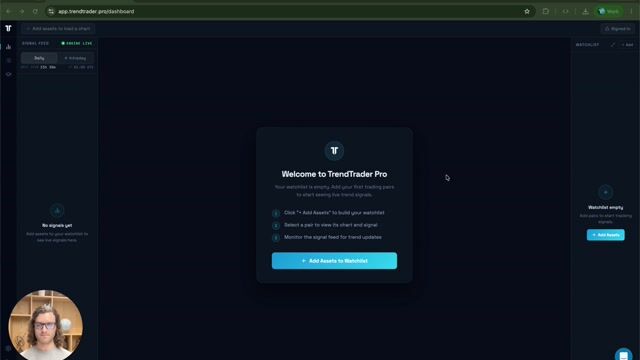
Your feed stays empty until you add assets, so this is step one. Nick walks through searching for any symbol, adding the 48 Popular assets or an entire asset class in one click, and managing the 100-asset limit. Then the expanded watchlist view: sorting by newest trends, longest running, asset class, or fresh flips, and removing assets one at a time, in bulk, or all at once.
Understanding Signals
3 lessons · ~53 min
Go deeper into how the trend engine works, how signals are generated, and what the day count and direction change really mean for your analysis.
 9:50
9:50
Reading Buy & Sell Signals
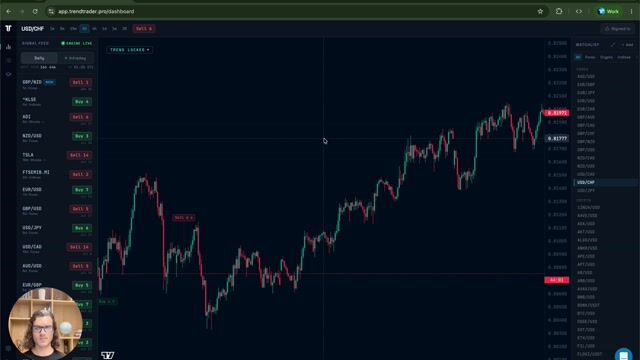
Every signal on your feed tells a story: which direction the market is leaning, how long that trend has been building, and how fresh the move is. In this lesson, you'll learn how to read a Buy or Sell at a glance — what the day count reveals about trend strength, what the NEW badge means, and how to tell a signal worth acting on from one that's already run its course.
 28:55
28:55
How the Trend Engine Works
Nick tells the story of the engine without giving away the recipe. Layer one is the original market-maker trend-establishment logic behind MarketMakers Method and ForexScalper, built in 2019 and still the foundation of every daily and intraday signal. Layer two is the filter he learned running a prime brokerage and a crypto market-making firm, which quietly removes the trends that were never real. You will learn why signals confirm a little later on purpose, why the engine is selective rather than noisy, and why the intraday engine is the same foundation, tuned for 1m, 5m, and 15m.
 14:10
14:10
Signal Confirmation & Context
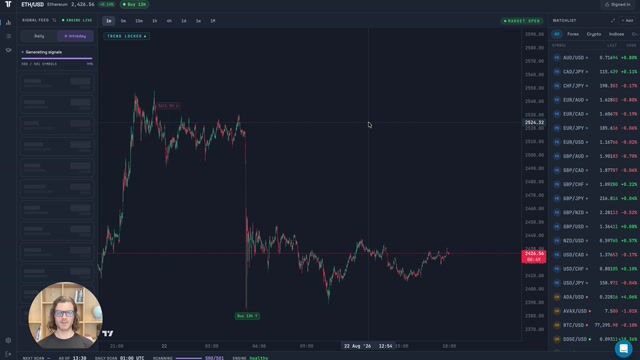
When a signal fires, it fires — nothing repaints, and there's no confirmation step to wait for. Nick walks an intraday Ethereum chart to show what a signal really is: the direction to trade until the next opposite signal disqualifies it. Covers reading the faded historic markers, why the 5-minute intraday scan lets you act immediately, and how asset-class volatility — crypto, indices, commodities vs forex — sets how much room your stop needs.
Risk Management
4 lessons · ~64 min
Protect your capital. Learn position sizing, how to manage open trades alongside live signals, and when to exit before a trend reverses.
 21:04
21:04
De-Risking in Range-Bound Markets
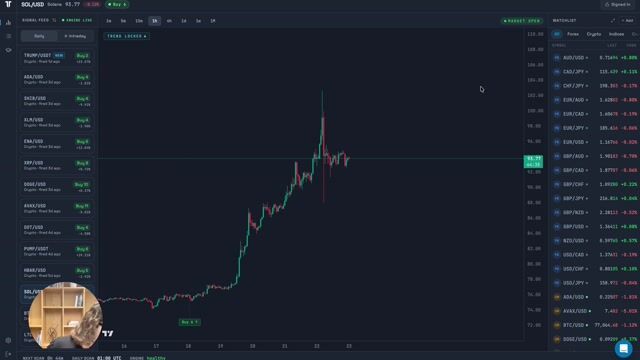
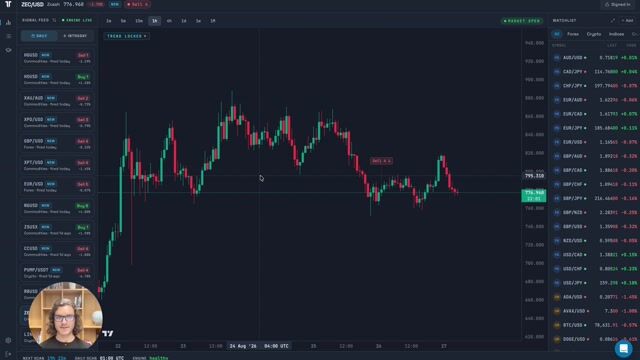
The daily engine is built to catch a real market-maker cycle, and in a range-bound market there isn't one — just accumulation and, on crypto, plenty of wash trading. Nick walks through a Solana chart to show what a ranging daily looks like, how to filter it with the intraday feed, and why the double-confirmation trade is the safest entry when the daily and intraday agree. Then the habits around it: trading both ways with the real cycle in the back of your mind, switching to a different asset instead of forcing a range, why spreads matter, and why not overtrading — or trading weekends — is a discipline in itself.
 17:32
17:32
Stop Loss & Take Profit
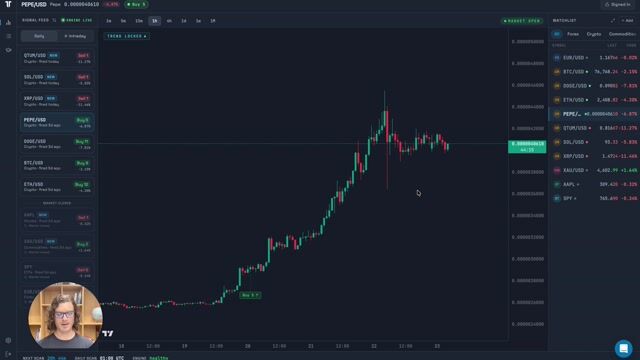
The stop loss is the foundation of risk management, and placing it well is the part to master. Nick walks Pepe and Solana charts to show where it goes: a few percent beyond the anchor point that started the trend, past the most respected swing high or low you find by looking left. From there, the take profit is simple math: one-to-one if your win rate carries it, or a wider target if you want each win to cover more losses. Then the habits around it: risking a fixed fraction of the account per trade, splitting that risk across several positions so you can bank some, move the stop to breakeven and let the rest run, and why a bigger account makes you more disciplined, not less.
 16:41
16:41
Drawdown Control & Recovery: The Truth
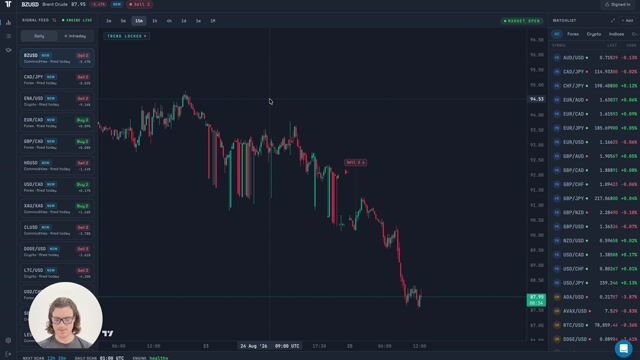
Every trader wants the drawdown playbook, so Nick titled the lesson that way on purpose — and then explains why, for a disciplined trader, drawdown control does not exist. Needing to manage a drawdown is the symptom: a position sized by feel, a stop that was never placed, a take profit skipped because this trend was going to run for weeks. On a live crude oil sell, he shows the alternative: with the stop beyond the anchor high, a fixed fraction of the account at risk, and a target that matches your win rate, all decided before the trade is placed. Then the honest part: why you get anxious about a position, why a good-looking setup or a winning month is never a reason to size up, and why the only recovery that exists is the one you never need.
 8:14
8:14
Scaling Into a Winning Position
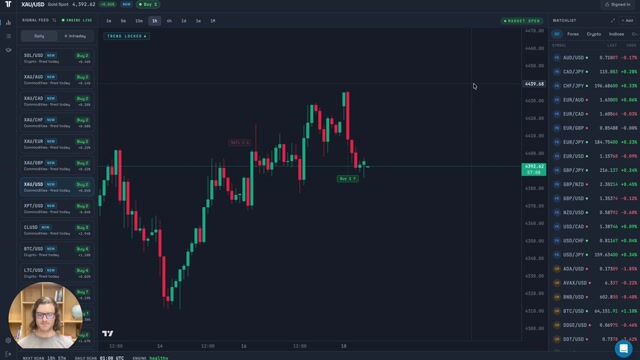
Adding to an open trade is a risk-management decision, not a feeling. Nick walks through a live Ethereum intraday trade he scaled into on one of his own funds: the original entry off a fresh anchor and new bullish trend, then a second intraday buy firing in the same direction while the first position was still open. You'll see the exact criteria he used (back-to-back same-direction intraday signals — a cousin of the double-confirmation setup, but intraday-only), why the add was sized at half the original position, how the total risk changed, and how he moved the first position's stop to lock in more than break-even after adding. The rule: define your scale-in criteria in advance, write them down, and never add just because a trade is floating in profit. Scaling in when price returns to your original entry is covered in a separate lesson.
Trading With TrendTrader Pro
1 lesson · ~19 min
How traders actually use TrendTrader Pro day to day — as a standalone system, as confirmation for the strategy you already trade, and advanced concepts straight from the founder.
Guides, References & Frameworks
The Psychology of Trend Following
Why most traders abandon winning systems too early, and how to build the discipline to stay in a trend.
How to Read a Signal Row
Every element of a row in the Signal Feed — the pill, the trend age, the fired line, the % chip, and the NEW badge — explained.
Why Signals Work Across All Timeframes
Why the same trend logic powers both the Daily and Intraday feeds — and how to decide which one fits your trading.
Common Mistakes New Signal Traders Make
The seven most common errors traders make when first using directional signals — and how to avoid each one.
Position Sizing in Practice
A simple, consistent framework for deciding how much to risk on any signal, in any market.
Building Your Morning Routine with Signals
A practical 10-minute morning routine to review the signal feed, note fresh flips, and plan your day.
Reading the Chart
A tour of the built-in multi-timeframe chart — signal markers, the trend pill, live prices — and how to line it up with the feed.
Glossary: Key Terms Explained
Signal feed, trend age, fresh flip, trend engine — every term used in the platform defined in plain English.