

Premium & Discount Zones Explained: How to Identify and Trade Them
Premium and discount zones help traders identify whether price is expensive or cheap relative to a recent range. Learn how to find them with Fibonacci and how to trade them.

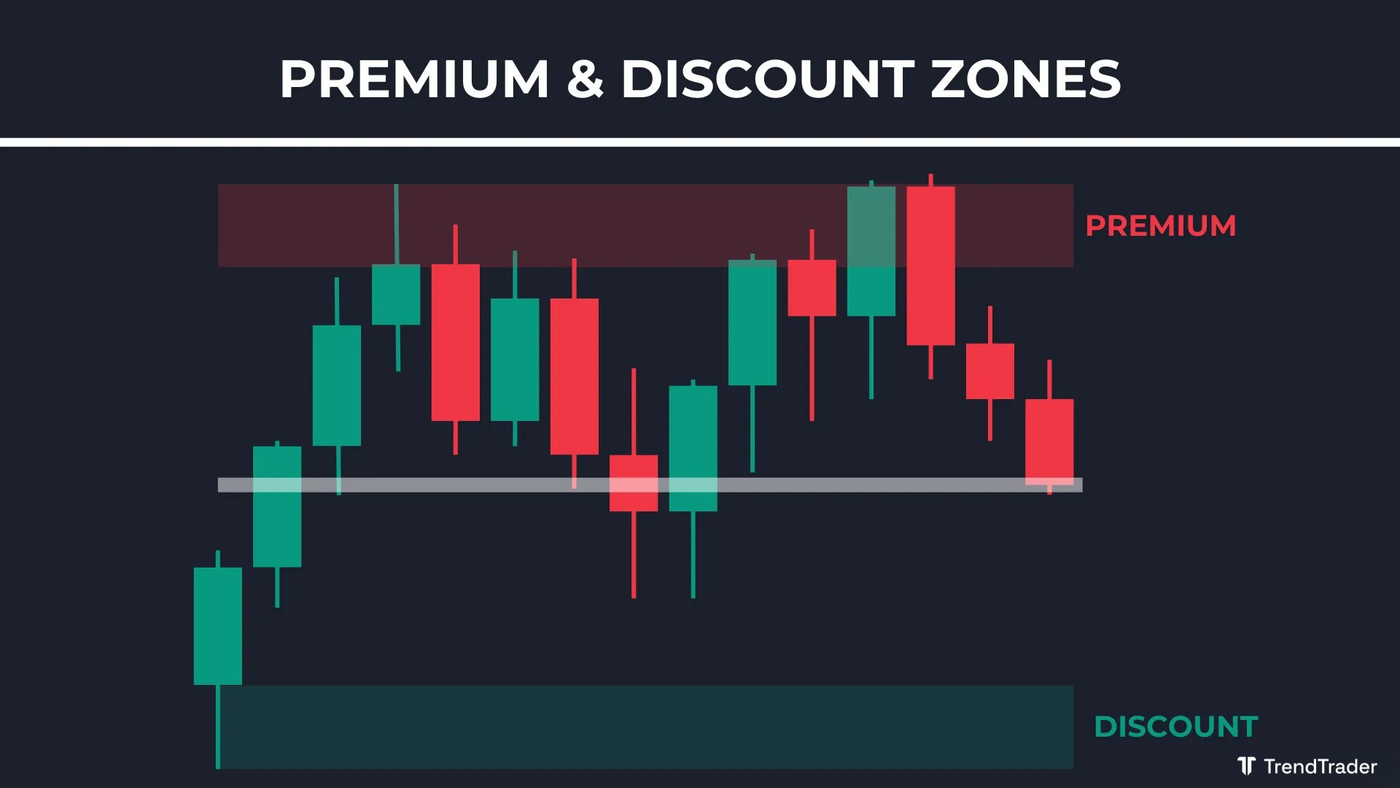
In SMC and ICT trading, a premium zone is the upper half of a price range where an asset is considered expensive. A discount zone is the lower half where it is considered cheap. Traders use these zones as a filter: look for long entries in discount zones and short entries in premium zones. The midpoint is the 50% equilibrium level, found using the Fibonacci retracement tool.
The Basics of Premium and Discount
The concept is intuitive. Premium means paying more than the perceived value. Discount means paying less. In everyday terms: concert tickets sold above face value are at a premium; winter coats marked down at the end of the season are at a discount.
In trading, the same logic applies to price within a defined range. If price is in the upper half of a recent swing, it is trading at a premium. If it is in the lower half, it is trading at a discount. This framing helps you avoid buying at the top of a range or selling at the bottom.
What Are Premium and Discount Zones in Trading?
Within any price swing, from a defined low to a defined high, you can split the range into two halves. The lower half, from the swing low up to the 50% midpoint, is the discount zone. The upper half, from the 50% midpoint up to the swing high, is the premium zone.
The midpoint itself (the 50% level) is equilibrium: neither expensive nor cheap. Most SMC traders want to be buying below equilibrium and selling above it. This gives them a structural edge on where they enter relative to the range.
How to Identify Premium and Discount Zones
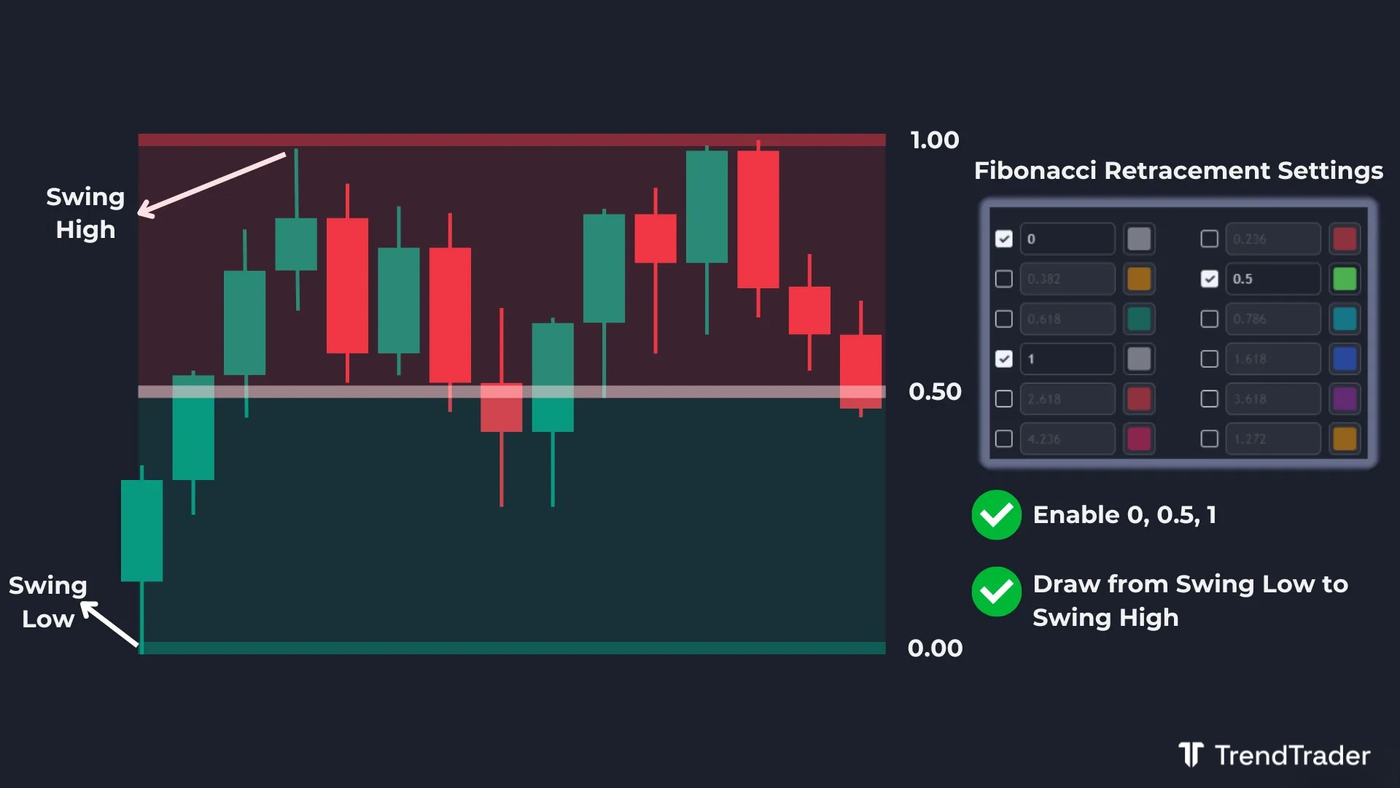
The standard method is the Fibonacci retracement tool. Configure it to show only the 0, 0.5, and 1 levels (hide everything else). Anchor the first point at the swing low and the second point at the swing high.
The 0-to-0.5 range is your discount zone. The 0.5-to-1 range is your premium zone. The 0.5 level is your equilibrium. Once drawn, you can see immediately where price is sitting relative to the range and whether a potential entry is at a favorable location.
How to Trade Premium and Discount Zones
Premium and discount zones work as a filter, not a standalone signal. They tell you which setups to take and which to skip. If you have a bullish bias, you only want to take long entries that occur in the discount zone. If you have a bearish bias, you only want to take short entries that occur in the premium zone.
The most common approach is to combine the zones with liquidity grabs and fair value gaps. The liquidity grab gives you the directional bias. The fair value gap gives you the entry point. The zone confirms whether that entry is at a favorable location in the range.
Long Trade Example
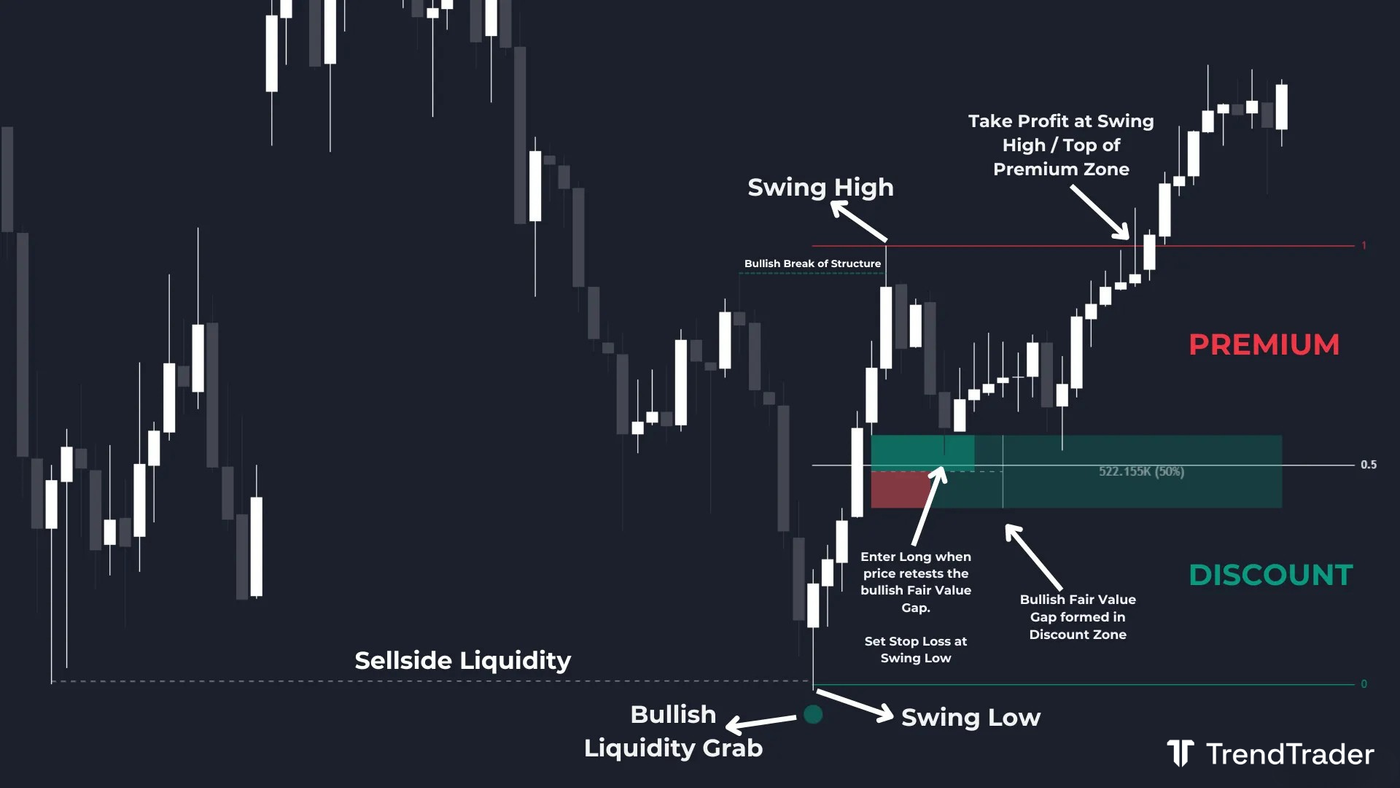
Price sweeps a recent low, triggering a bullish liquidity grab. Price then rallies sharply, leaving a bullish fair value gap (FVG) and breaking market structure to the upside, creating a bullish break of structure (BOS). Apply the Fibonacci tool from the swing low to the swing high. If the FVG sits inside the discount zone (below the 50% level), it qualifies as a favorable entry. Wait for price to retrace into the FVG, set your stop loss below the swing low, and target the swing high.
Short Trade Example
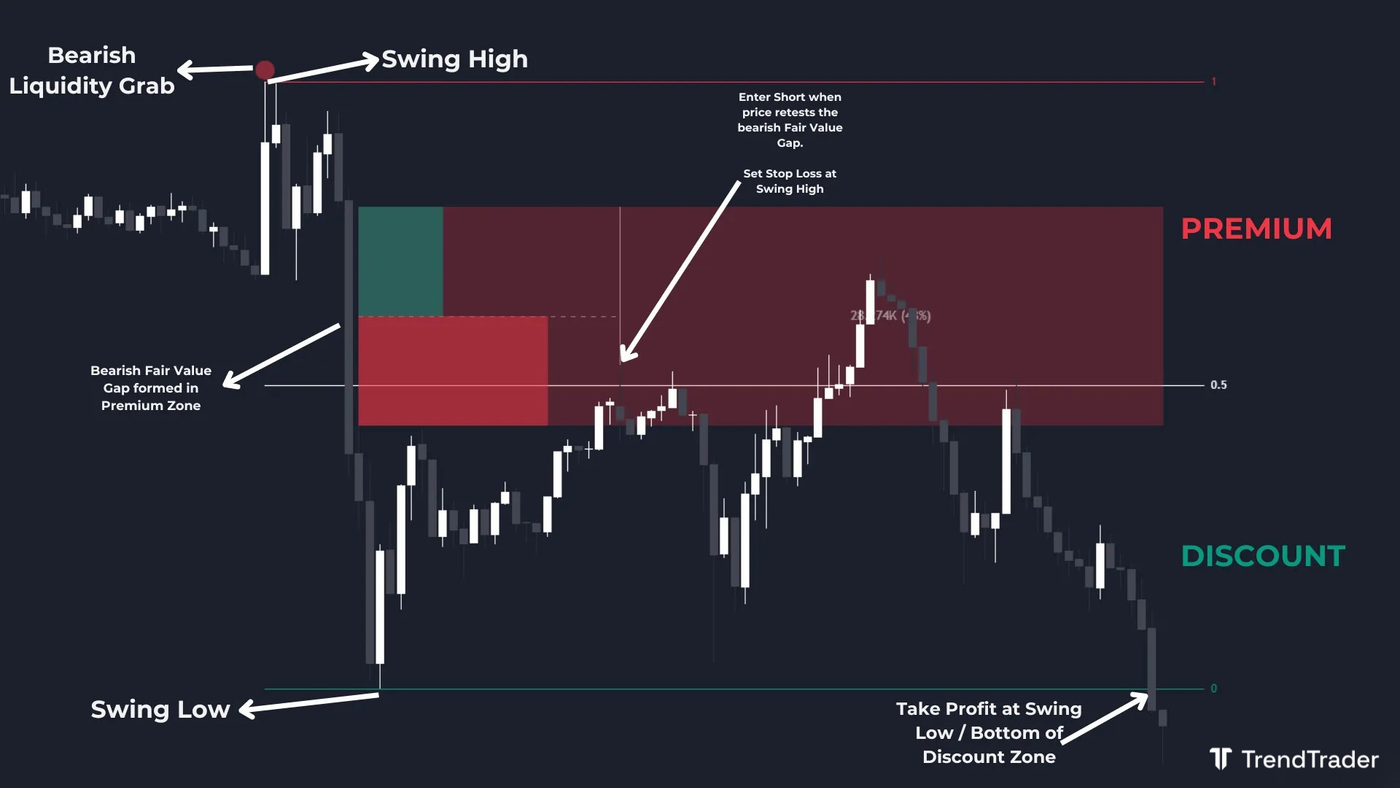
Price sweeps a recent high, triggering a bearish liquidity grab. Price then drops sharply, leaving a bearish fair value gap (FVG). Apply the Fibonacci tool from the swing low to the swing high. If the FVG sits inside the premium zone (above the 50% level), it qualifies as a favorable entry. Wait for price to retrace back into the FVG, set your stop loss above the swing high, and target the swing low.
Why Use Premium and Discount Zones?
The zones keep you out of unfavorable entries. Buying at the top of a range or selling at the bottom puts you on the wrong side of the probability equation: you have less room to run and more risk of an immediate reversal. Filtering for discount entries on longs and premium entries on shorts means your setups start from a structurally better position in the range.
They also pair well with order blocks. An order block sitting inside a discount zone is a stronger candidate for a long trade than the same order block sitting in a premium zone. The zone adds another layer of confluence to any entry.
What Is the Best Timeframe for Premium and Discount Zones?
The zones apply on any timeframe, but the most reliable reads come from higher timeframes. Drawing the Fibonacci on a daily or four-hour swing gives you a meaningful range to work from. Using lower timeframe entries (15-minute, five-minute) within the higher timeframe zone keeps you aligned with the bigger picture.
Avoid drawing the Fibonacci on every minor swing. The range needs to be significant enough to matter. Use clear swing highs and swing lows that other traders are also likely to reference.
Should You Trade Premium and Discount Zones Alone?
No. On their own, the zones tell you where price is but not where it is going. They need confluence: a liquidity grab to establish directional bias, a fair value gap or order block to define the entry, and structure (a BOS or CHoCH) to confirm the shift in momentum. The zone is the filter. The other tools are the signal.
This article is for educational purposes only and does not constitute financial advice. Trading involves significant risk of loss. Do your own research and consult a licensed financial advisor before making any trading decisions.
Browse more trading concept guides on the TrendTrader blog.
