
De-Risking in Range-Bound Markets
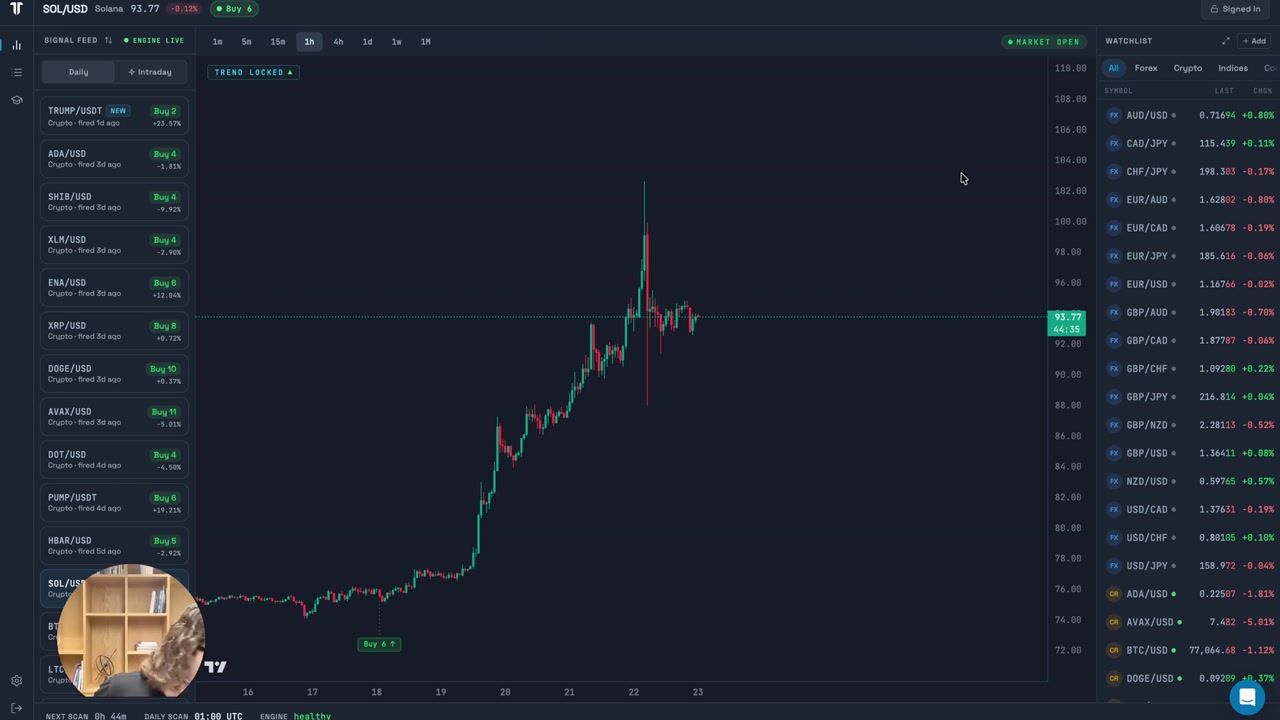 21:04
21:04
The daily engine is built to catch a real market-maker cycle, and in a range-bound market there isn't one — just accumulation and, on crypto, plenty of wash trading. Nick walks through a Solana chart to show what a ranging daily looks like, how to filter it with the intraday feed, and why the double-confirmation trade is the safest entry when the daily and intraday agree. Then the habits around it: trading both ways with the real cycle in the back of your mind, switching to a different asset instead of forcing a range, why spreads matter, and why not overtrading — or trading weekends — is a discipline in itself.
Watch free in the platform →How to watch
- Create a free account. Every University lesson is included — no plan required.
- Open University in the platform. Video lessons and Quick Reads, unlocked from day one.
- Watch De-Risking in Range-Bound Markets and the rest of Risk Management at your own pace. A new video lands every week.
More in Risk Management
Protect your capital. Learn position sizing, how to manage open trades alongside live signals, and when to exit before a trend reverses.
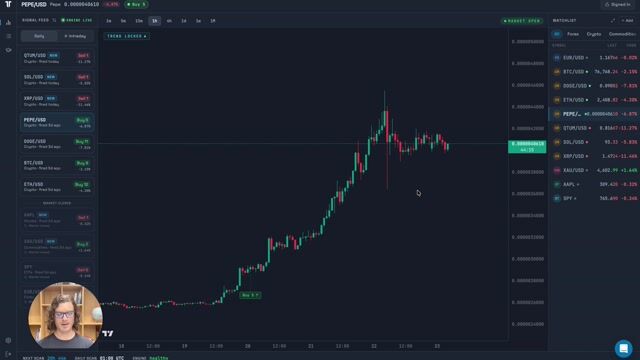 17:32
17:32
Stop Loss & Take Profit
The stop loss is the foundation of risk management, and placing it well is the part to master. Nick walks Pepe and Solana charts to show where it goes: a few percent beyond the anchor point that started the trend, past the most respected swing high or low you find by looking left. From there, the take profit is simple math: one-to-one if your win rate carries it, or a wider target if you want each win to cover more losses. Then the habits around it: risking a fixed fraction of the account per trade, splitting that risk across several positions so you can bank some, move the stop to breakeven and let the rest run, and why a bigger account makes you more disciplined, not less.
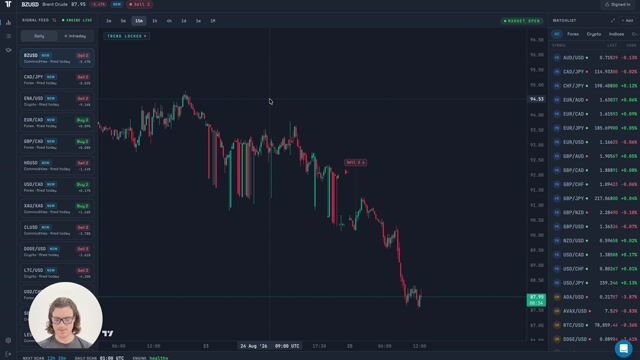 16:41
16:41
Drawdown Control & Recovery: The Truth
Every trader wants the drawdown playbook, so Nick titled the lesson that way on purpose — and then explains why, for a disciplined trader, drawdown control does not exist. Needing to manage a drawdown is the symptom: a position sized by feel, a stop that was never placed, a take profit skipped because this trend was going to run for weeks. On a live crude oil sell, he shows the alternative: with the stop beyond the anchor high, a fixed fraction of the account at risk, and a target that matches your win rate, all decided before the trade is placed. Then the honest part: why you get anxious about a position, why a good-looking setup or a winning month is never a reason to size up, and why the only recovery that exists is the one you never need.
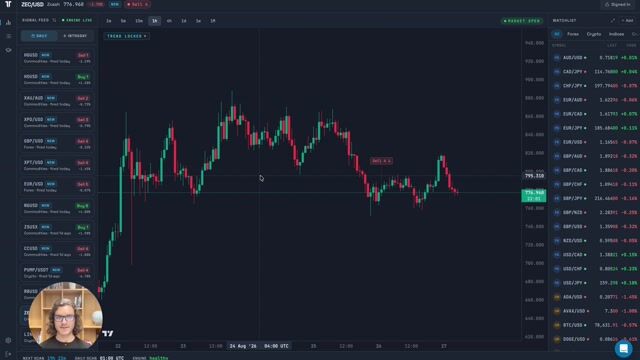 8:14
8:14
Scaling Into a Winning Position
Adding to an open trade is a risk-management decision, not a feeling. Nick walks through a live Ethereum intraday trade he scaled into on one of his own funds: the original entry off a fresh anchor and new bullish trend, then a second intraday buy firing in the same direction while the first position was still open. You'll see the exact criteria he used (back-to-back same-direction intraday signals — a cousin of the double-confirmation setup, but intraday-only), why the add was sized at half the original position, how the total risk changed, and how he moved the first position's stop to lock in more than break-even after adding. The rule: define your scale-in criteria in advance, write them down, and never add just because a trade is floating in profit. Scaling in when price returns to your original entry is covered in a separate lesson.