
How the Trend Engine Works
 28:55
28:55
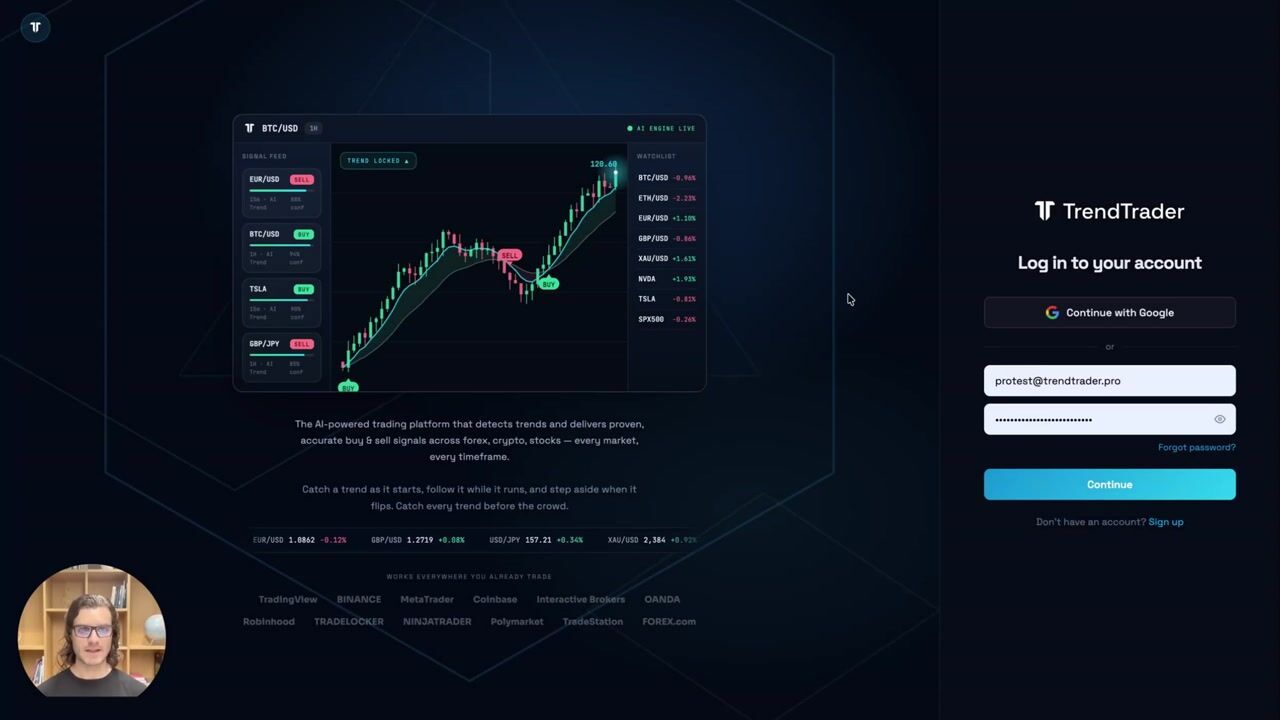
Nick tells the story of the engine without giving away the recipe. Layer one is the original market-maker trend-establishment logic behind MarketMakers Method and ForexScalper, built in 2019 and still the foundation of every daily and intraday signal. Layer two is the filter he learned running a prime brokerage and a crypto market-making firm, which quietly removes the trends that were never real. You will learn why signals confirm a little later on purpose, why the engine is selective rather than noisy, and why the intraday engine is the same foundation, tuned for 1m, 5m, and 15m.
Watch free in the platform →How to watch
- Create a free account. Every University lesson is included — no plan required.
- Open University in the platform. Video lessons and Quick Reads, unlocked from day one.
- Watch How the Trend Engine Works and the rest of Understanding Signals at your own pace. A new video lands every week.
More in Understanding Signals
Go deeper into how the trend engine works, how signals are generated, and what the day count and direction change really mean for your analysis.
 9:50
9:50
Reading Buy & Sell Signals
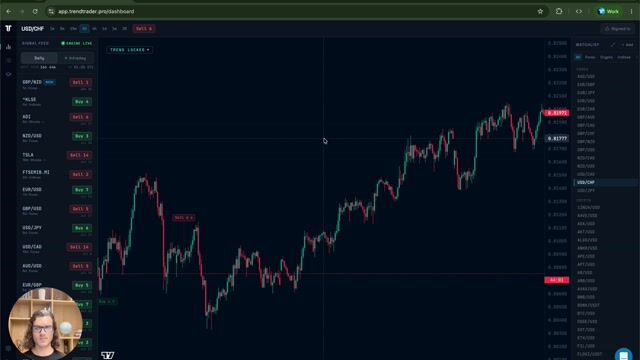
Every signal on your feed tells a story: which direction the market is leaning, how long that trend has been building, and how fresh the move is. In this lesson, you'll learn how to read a Buy or Sell at a glance — what the day count reveals about trend strength, what the NEW badge means, and how to tell a signal worth acting on from one that's already run its course.
 14:10
14:10
Signal Confirmation & Context
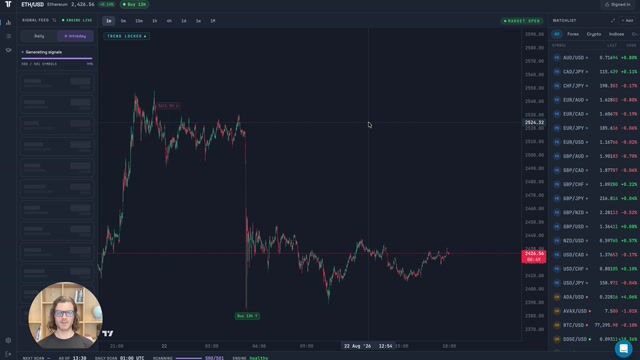
When a signal fires, it fires — nothing repaints, and there's no confirmation step to wait for. Nick walks an intraday Ethereum chart to show what a signal really is: the direction to trade until the next opposite signal disqualifies it. Covers reading the faded historic markers, why the 5-minute intraday scan lets you act immediately, and how asset-class volatility — crypto, indices, commodities vs forex — sets how much room your stop needs.